


The Art of Precision
Why Lighting Control Matters
Lighting is the most powerful tool in interior design, yet it is often the most misunderstood. We are moving past the era of simple “On/Off” switches. To truly experience the potential of modern LED technology, Lighting Control is not a luxury—it is an infrastructure necessity.
The old dimming is absolute
- Standard wall switches (dimmers) rely on “Phase Cut” technology, which simply chops the electricity flowing to the bulb. This outdated method creates three major problems that ruin the experience of a luxury home:
- The 20% Drop-off: Standard dimmers rarely dim below 10% or 20%. When you try to dim further, the light simply shuts off or flickers.
- Inability to Tune Color: A standard switch cannot tell a light fixture to change from “Cool White” to “Warm White.” It can only control intensity.
- Sometime this old technology is more expensive than a lighting control switch.
- Flicker and Buzzing: Without a digital control system, deep dimming often causes audible buzzing or visible strobing, which causes subconscious eye strain.
To achieve true 0.1% dimming (a faint, candle-like glow) and Tunable White capability, You need a Digital Lighting Control System.
The Possibilities of Light
When You implement a professional Lighting Control system (using protocols like DALI), You unlock capabilities that static lights cannot offer:
- True Deep Dimming: Dim your lights down to 0.1%. This is not just “darker”—it is a completely different texture of light that creates intimacy and warmth without the harshness of a bulb merely “undervolting.”
- Tunable White: Adjust the actual color of the white light. Shift from a crisp, invigorating 4000K (like a gallery or office) for reading, to a golden 2200K (like candlelight) for dining.
- Scene Setting: Instead of walking around a room adjusting five different dimmer knobs, a single digital command transforms the room. One button press creates a “Dinner Scene” where the table is highlighted, artwork is dimmed, and the perimeter is soft.
Lighting Control
Lighting Control (The “Experience” Layer)
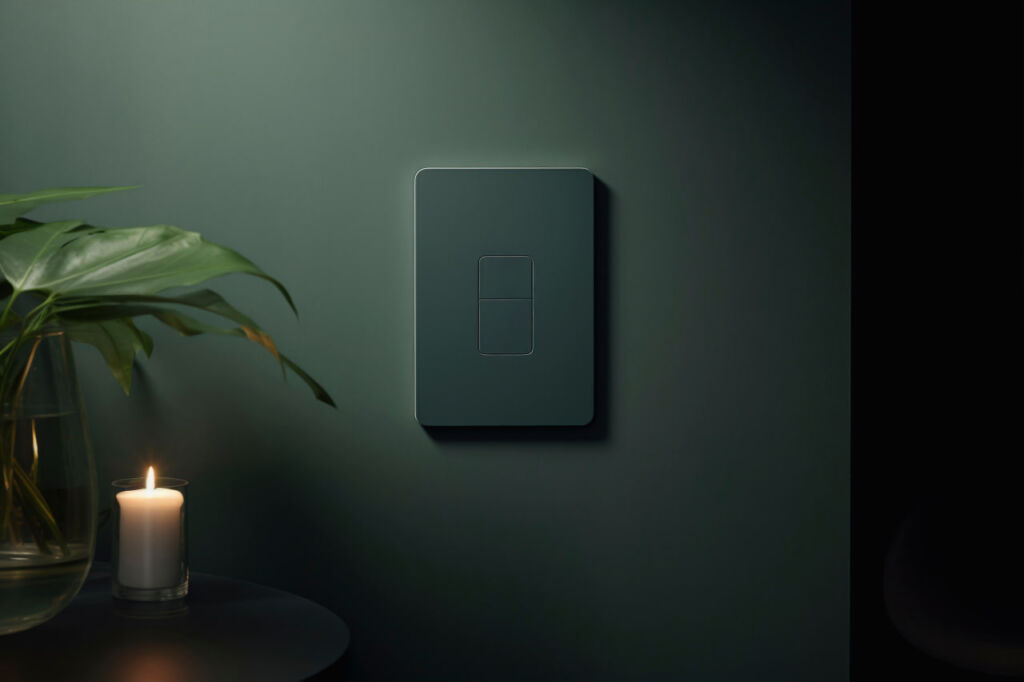
Lighting Control is a specialized discipline focused purely on the quality and behavior of light.
Interface: Controlled via Wall Keypads.
Function: It does not require you to unlock a phone or open an app. It provides a tactile, engraved keypad on the wall.
vs
Smart Home Automation
The Smart Home (The “Management” Layer)
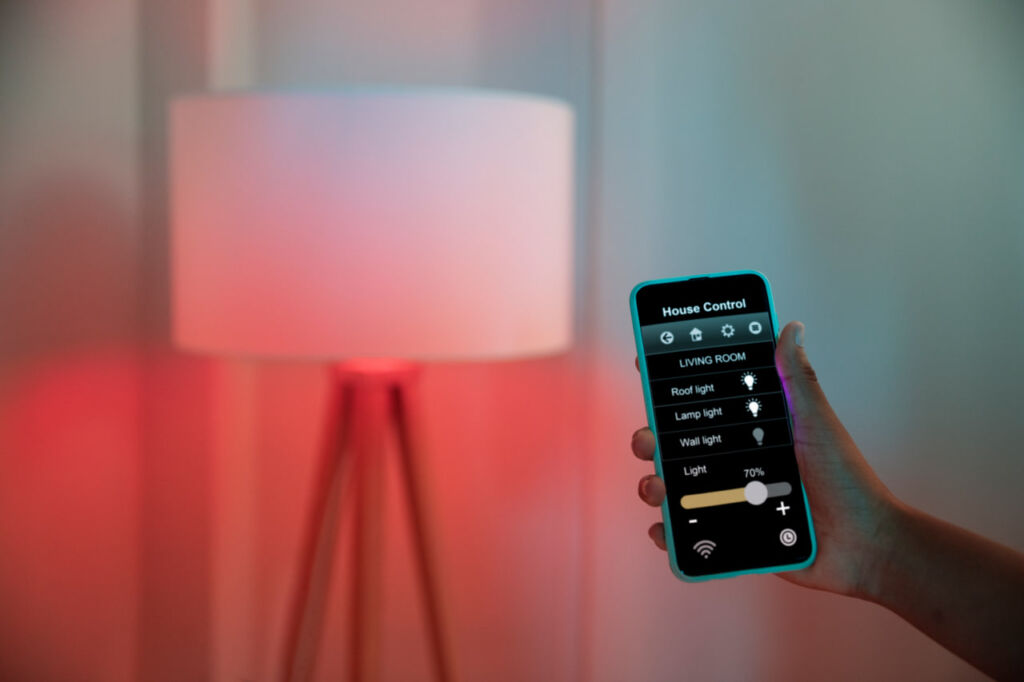
The “Smart Home” is about integration and device management. It brings together your AC, curtains, security, and music.
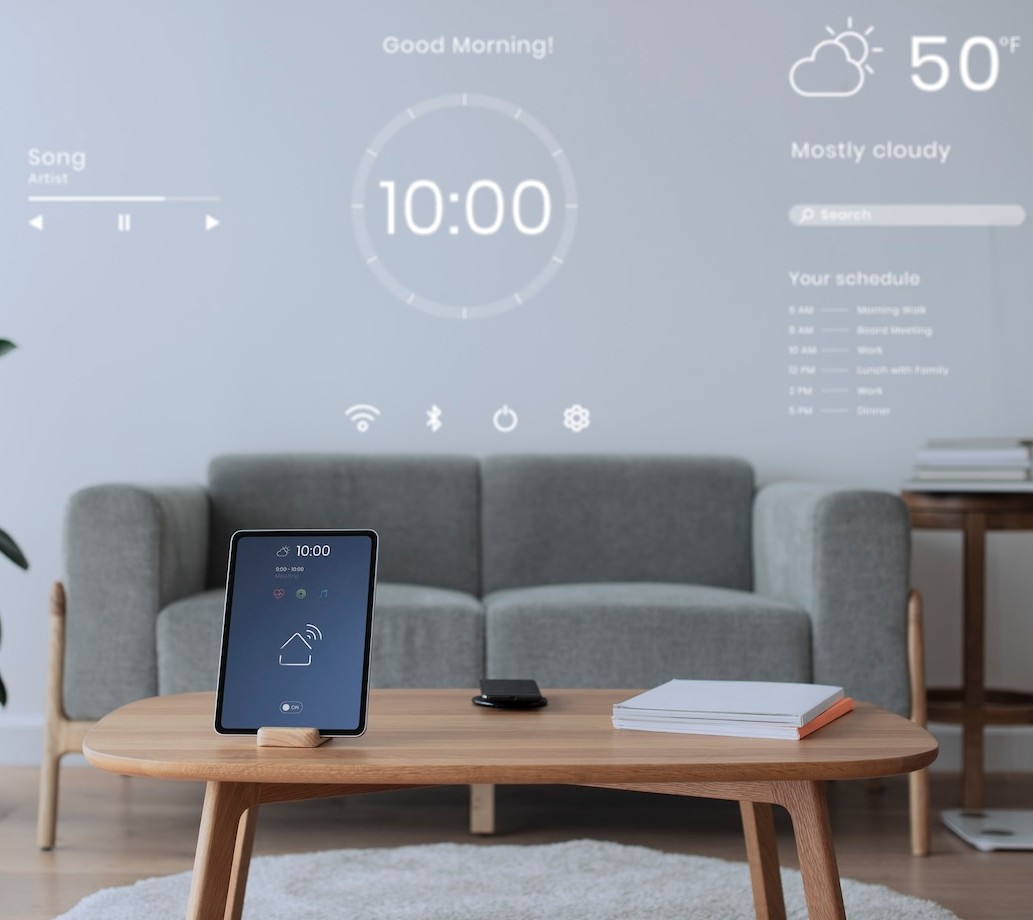
Interface: Primarily controlled via Mobile Apps or Voice Control.
Function: It allows you to check if you left the AC on while you are at the airport, or close the curtains automatically. It is a broad management tool.
The Key Difference: Independence and Affordability
A lighting control system ensures that when you walk into a room, a single button press instantly recalls a complex “mood” of color and brightness. It is about immediate, physical interaction with your environment, not managing devices on a screen.
Crucially, Lighting Control can function as a completely standalone system. You do not need to integrate it with a complex, expensive home automation processor to unlock these benefits. By utilizing modern wireless technologies like Zigbee and BLE (Bluetooth Low Energy), implementation is significantly cheaper and less invasive than a full smart home setup. This approach gives you professional, keypad-based control over your lighting atmosphere without the cost or complexity of a fully integrated home system.
Human Centric Lighting: Syncing with the Sun
The ultimate goal of Lighting Control is Human Centric Lighting (HCL). Our bodies are biologically connected to the sun. For millions of years, humans have evolved to respond to the color of the sky.
Morning (Cortisol)
Evening (Melatonin)
Without Lighting Control, you are stuck with one static color all day. If your lights are bright white, they will disrupt your sleep hormones at night. If they are too warm, you will feel drowsy during the day.
The "Sun Match" Solution
A Lighting Control system can be programmed to automatically track the sun's position in your specific longitude and latitude.
Sunrise: The lights inside your home gently fade up in warm tones.
Midday: The lights shift to a cool, bright white, matching the intensity of the sun outside to keep you energetic.
Sunset: As the sun goes down, your interior lights automatically warm up and dim down, mimicking the sunset and preparing your body for rest.
This is not just “smart”—it is essential for wellness, mood stability, and health.
Sunrise
Warm, gentle light that fades in with the sun — helping your body wake up naturally and start the day calmly.
Midday
Bright, cool white light aligned with the sun’s peak — boosting focus, alertness, and productivity.
Sunset
Soft amber tones that dim with the sun — relaxing your nervous system and preparing you for rest.
Wired vs. Wireless: Choosing Your Infrastructure
Once you decide to implement lighting control, the next decision is the infrastructure:
How do the keypads talk to the lights?
There are two main paths: Wired (DALI) and Wireless (Zigbee/BLE).1 Both can achieve the goal of “Human Centric Lighting,” but they differ significantly in cost, installation, and performance.
Wired Control (The Gold Standard: DALI)
• Reliability: Because every command travels over a physical wire, it is 100% reliable. There is no interference from Wi-Fi or thick concrete walls.
• The "Zero Popcorn" Effect: When you press a scene button, every light in the room responds at the exact same millisecond. There is no lag.
• Deep Dimming: Wired DALI drivers are the industry standard for achieving stable 0.1% dimming without flickering.
• The Cost: This is the most expensive option because it requires a specialized electrician to run dedicated cabling to every single light fixture during the construction phase. It is ideal for New Builds.
Wireless Control (The Agile Solution: Zigbee & BLE)
Wireless systems use radio waves to communicate. Modern protocols like Zigbee 3.0 and BLE (Bluetooth Low Energy) have revolutionized this space by allowing professional control without the wires.
• Retrofit Friendly: You do not need to open walls or run new cables. You simply replace the standard light switch with a wireless keypad and install a wireless receiver (driver) at the light fixture.
• Cost Effective: You save significantly on labor and cabling (copper) costs.
• Standalone & Decentralized:
o Zigbee/BLE systems can often function as "Standalone" networks. A wireless keypad can talk directly to the light bulbs (a process called "binding").
o No Central Brain Needed: Unlike older automation systems that required a $3,000 processor in a rack, these systems are decentralized. If one keypad breaks, the rest of the house keeps working.
The Trade-off: The "Popcorn Effect"
In some wireless mesh networks (especially consumer-grade ones), signals hop from device to device. This can sometimes cause a slight delay where lights turn on one by one in a wave, rather than all at once. This is known as the "Popcorn Effect." High-end wireless systems (like Casambi or Lutron) minimize this, but it is a physical reality of wireless tech compared to wired.
01. Wired Control (The Gold Standard: DALI)
In a wired system, a dedicated low-voltage cable connects every light fixture and keypad to a central panel.2 The global standard for this is DALI (Digital Addressable Lighting Interface).3
Reliability
The "Zero Popcorn" Effect
Deep Dimming
The Cost
02. Wireless Control (The Agile Solution: Zigbee & BLE)
Wireless systems use radio waves to communicate.4 Modern protocols like Zigbee 3.0 and BLE (Bluetooth Low Energy) have revolutionized this space by allowing professional control without the wires.
You do not need to open walls or run new cables.5 You simply replace the standard light switch with a wireless keypad and install a wireless receiver (driver) at the light fixture.
You save significantly on labor and cabling (copper) costs.
- Zigbee/BLE systems can often function as “Standalone” networks. A wireless keypad can talk directly to the light bulbs (a process called “binding”).
- No Central Brain Needed: Unlike older automation systems that required a $3,000 processor in a rack, these systems are decentralized. If one keypad breaks, the rest of the house keeps working.
The Trade-off: The "Popcorn Effect"
In some wireless mesh networks (especially consumer-grade ones), signals hop from device to device. This can sometimes cause a slight delay where lights turn on one by one in a wave, rather than all at once. This is known as the "Popcorn Effect." High-end wireless systems (like Casambi or Lutron) minimize this, but it is a physical reality of wireless tech compared to wired.
Summary Comparison Table
| Feature | Wired (DALI) | Wireless (Zigbee / BLE) |
| Best For | New Construction / Luxury Renovations | Retrofits / Cost-Conscious Builds |
| Reliability | 100% (Interference Free) | 95-99% (Subject to Range/Interference) |
| Dimming Quality | Excellent (Standardized 0.1%) | Good (Varies by driver quality) |
| Response Speed | Instant (Synchronized) | Fast (Potential slight "Popcorn" lag) |
| Installation Cost | High (Requires specialized cabling) | Low (Uses existing wiring) |
| Maintenance | Zero (Hardwired keypads) | Low (Some keypads use batteries) |
Which Path Should You Take?
Choosing between Wired and Wireless is not about which technology is "better"—it is about which technology fits the current stage of your home.
Best for: Finished homes, limited budgets, or systems with fewer than 128 devices.
If your house is already built and you cannot tear open the ceilings to run new cables, Wireless (Zigbee 3.0) is your best solution. It is cost-effective and non-invasive.
- The Rule of 128: Wireless mesh networks are most stable when they are not overcrowded. If your total count of devices (keypads + light bulbs) is under 128, a Zigbee system can be incredibly robust and responsive.
- Compatibility Key: To ensure your keypads talk to your lights without a central processor, you must ensure both devices support Touchlink or standard Zigbee 3.0. This allows them to "bind" directly to each other, ensuring that even if your internet goes down, your light switches still work.
Best for: New construction, major renovations, or large estates (150+ devices).
If you are pouring concrete and building a new home, you have a one-time opportunity to install Wired (DALI) infrastructure.
- Long-Run Stability: Wires do not care about thick concrete walls, interference from your neighbor's Wi-Fi, or batteries running out. A wired system installed today will work exactly the same way in 20 years.
- Unlimited Scale: Unlike wireless mesh networks which can get "congested" with too many devices, wired systems can scale to thousands of fixtures without losing a millisecond of speed.
The Verdict:
Run the DALI wires. It is an asset that adds permanent value to the property.
Why Choose Essensia?
At Essensia, we believe that technology should serve you, not the other way around. Navigating the world of DALI, Zigbee, dimming curves, and color temperatures can be overwhelming. That is where we come in.
We do not just sell products; we design experiences. Whether you are building a modern villa from the ground up or upgrading a finished apartment, Essensia provides the engineering expertise and curated hardware to bring your vision to light.
01. A Curated Portfolio of Excellence
We have done the hard work of testing and selecting the world’s best lighting brands and control interfaces.
02.Engineer-Led Guidance
Making the choice between Wired and Wireless is a significant technical decision. Our experienced engineers will sit down with you to analyze your specific situation:
We can design a DALI infrastructure that adds permanent value to your property.
We can implement a professional Wireless solution that requires no demolition and zero mess.
The Result
You get an honest, technical recommendation based on your budget and building constraints, not a sales pitch.
03.Complete Design & Comfort
Lighting Control is useless if the light fixture itself is poor quality. At Essensia, we look at the complete picture.
Fixture Selection
Visual Comfort
With Essensia, you don’t just get a switch on the wall. You get a team dedicated to your comfort.